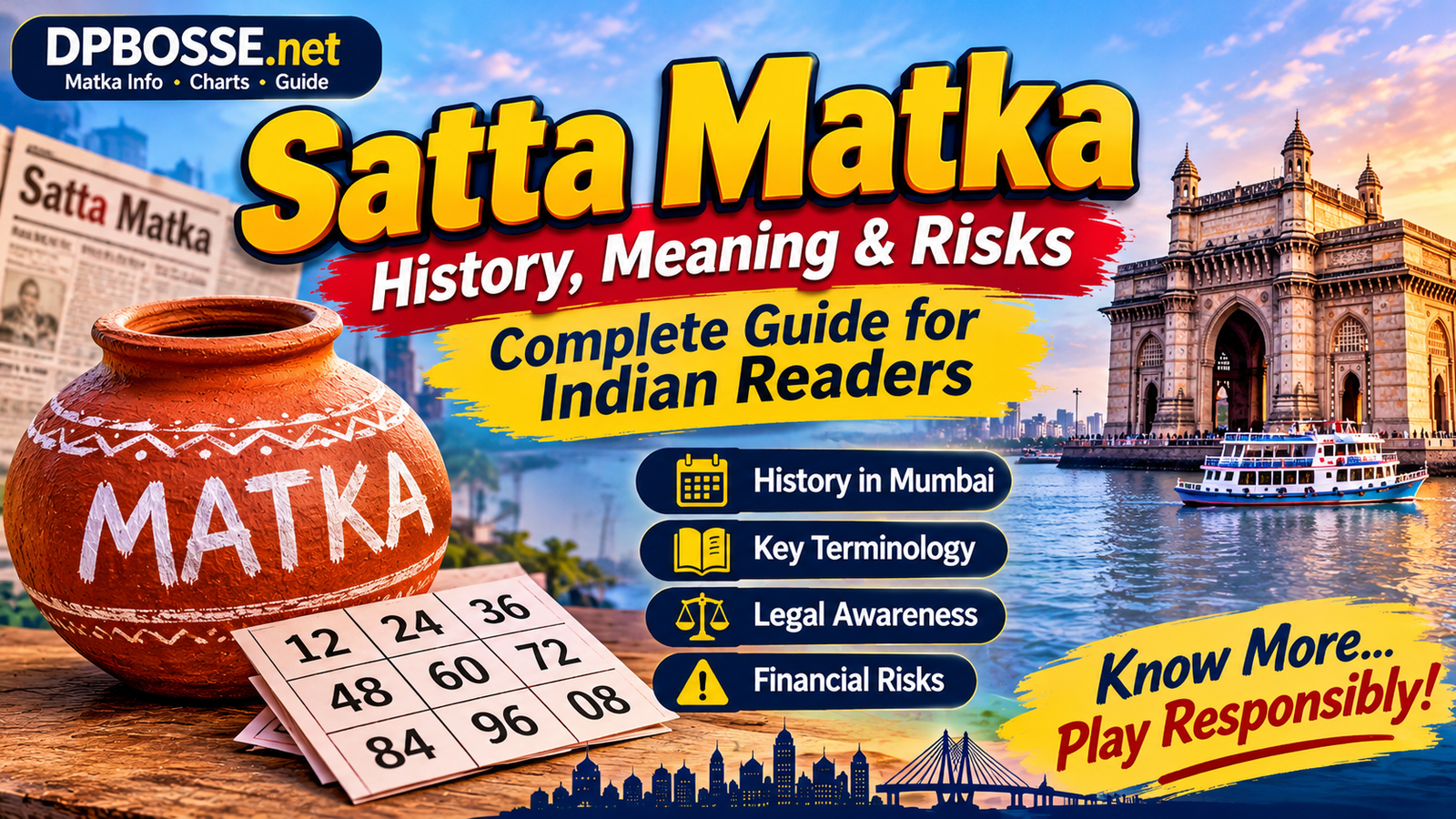
Understanding DPBOSSE.net and Its Online Information
DPBOSSE.net is an online website that publishes information related to Satta Matka markets, result listings, charts, and different Matka-related topics. Its homepage brings several market sections together, allowing visitors to explore information associated with names such as Kalyan, Milan, Rajdhani, Main Bazar, Mumbai Morning, and Time Bazar.
The website includes different sections for market-related updates, Jodi and Panel information, result records, and other reference material. It also has a blog section where readers can find articles explaining Matka terminology, market names, website features, and general background information. Visitors can explore the available content through the DPBOSSE.net homepage and the DPBOSSE Blog.
DPBOSSE.net should be understood as an online information website. Its public pages do not establish a verified network of physical branches or offices in Mumbai or other Indian cities. Readers should also distinguish between information displayed on a website and services offered by separate operators.
One subject that attracts considerable online attention is Satta Matka. The topic has a long association with Mumbai and has changed considerably with the growth of digital platforms. People search for its history, meaning, market names, Jodi, Panel, and old result charts. However, many readers do not understand the background or the risks associated with the activity.
This guide explains the subject in simple Indian English. It covers the historical background, common terminology, online information formats, financial risks, digital safety, and important legal considerations. The aim is to help readers understand the topic clearly without presenting gambling as a source of income.
What Is Satta Matka?
Satta Matka is a traditional number-based gambling activity associated with India. The word “Satta” is commonly connected with betting or wagering, while “Matka” means an earthen pot. The name is historically associated with a method of selecting numbered slips from a pot.
Over time, the traditional activity developed into different number-based formats. These formats became associated with several market names and a specialised vocabulary. People researching the subject may come across terms such as Kalyan Matka, Milan Matka, Main Bazar, Rajdhani, Jodi, Panna, Panel, Open, and Close.
Today, the subject is also discussed on websites that publish market-wise information and historical records. Such websites may organise their pages into separate market listings, charts, result tables, and educational articles.
It is important to understand that the activity itself and the information published about it are two different things. A person can research the history of Matka, learn the meaning of its terminology, or study old records without participating in gambling.
Another important point is that a published result does not predict the next result. Historical records cannot guarantee a future outcome, and claims of fixed or certain numbers should not be treated as reliable financial information.
For Indian readers, understanding the background and the legal position is just as important as understanding the terminology.
History of Satta Matka in Mumbai
The history of Matka is closely connected with Mumbai, which was formerly known as Bombay. Historical accounts commonly associate its early development with cotton trading and the practice of betting on fluctuations in cotton rates.
During the early period, information about cotton prices attracted the attention of people involved in betting activities. When the original system changed, number-based methods gradually became more common. The use of numbered slips and an earthen pot became associated with the name Matka.
Mumbai became an important centre in the development of this activity. Over time, different market names became familiar to people interested in Matka. Names such as Kalyan, Main Bazar, Milan, and Rajdhani are now frequently seen in online content connected with the subject.
The activity also changed as communication methods developed. Earlier, information was shared through traditional local networks. Later, printed records, telephone communication, and digital platforms changed how people accessed related information.
Today, a person can search for historical Matka information from almost anywhere in India. Websites may display market names, old records, and different result formats on the same page.
However, online availability should never be confused with legal permission. A website being accessible through a mobile phone or computer does not automatically make every activity described on it lawful.
The Mumbai connection is an important part of the subject’s history, but readers should avoid assuming that every website using a Mumbai-related market name has an actual office or business operation in Mumbai.
How Does the Matka System Work?
To understand online Matka-related information, it is useful to look at how websites organise their published records.
Different websites use different layouts, but many follow a similar information structure. A page may display a market name, a published schedule, a result entry, and links to related historical charts.
The following points explain the general information structure without giving instructions for placing bets.
Market Identification
A market name is used to identify a particular section of a website. Kalyan, Milan, Main Bazar, Rajdhani, and other names are examples commonly found in Matka-related listings.
Each market may have its own displayed information and schedule. Readers should check the date and source instead of assuming that every website publishes identical records.
Published Result Information
A website may display a numerical entry under a particular market heading. Some pages also provide separate fields for Open, Close, Jodi, or Panel information.
These entries should be understood as information published by that website. They are not proof of a guaranteed future result.
Historical Records
Some websites maintain older records in the form of charts or tables. These records may be arranged by market, date, or result category.
A historical chart can help readers understand how a website stores information. However, past entries cannot reliably predict future random outcomes.
Updates and Corrections
Online information can change. A page may be refreshed, updated, corrected, or temporarily unavailable. Readers should always pay attention to the date and the source of a displayed entry.
The main purpose of understanding these sections should be information awareness. A result page should not be treated as financial advice or as a dependable method of earning money.
Common Satta Matka Terms Explained
New readers may find the terminology confusing because many websites use specialised words. Understanding their general meaning makes it easier to read educational pages and historical records.
Open
Open is a term used for the opening part of a published result format. Websites may display it separately from the closing information.
Close
Close refers to the closing part of a result entry. It is often shown as a separate field in market-wise listings.
Jodi
Jodi generally refers to a two-digit combination. It is a common term in Matka-related charts and result pages.
Panna
Panna is a term associated with a three-digit combination in traditional Matka terminology.
Panel
Panel is another term used for certain three-digit combinations. Some websites present Panel and Panna in related contexts, although the exact display can differ.
Single
Single generally refers to an individual digit from zero to nine in a result format.
Matka Chart
A Matka Chart is a table containing previously published entries. It may organise information according to dates, markets, or result categories.
Market
A market is a named section under which a website groups related information. Different market names may have different displayed schedules and records.
These definitions are intended to explain the language used on websites. They should not be treated as instructions for gambling or as a mathematical method for predicting future results.
Why Is Satta Matka Popular in Online Searches?
The subject attracts online searches for several reasons. Some people are interested in its history, while others want to understand the terminology and the way websites present information.
Historical interest: Mumbai has an important place in the history of Matka. Readers may want to understand how the activity developed and why it became associated with different market names.
Understanding terminology: New visitors often come across words such as Jodi, Panna, Panel, Open, and Close. They search for simple explanations of these terms.
Market information: People researching the topic may look for market names and want to understand how websites organise their information.
Historical charts: Older records attract attention from people studying the history and presentation of numerical information.
Digital awareness: Modern websites have changed how people access information. Readers may want to understand the difference between traditional references and online listings.
Mumbai connection: Search interest may also come from people looking for information about Kalyan, Main Bazar, Milan, and other names associated with the wider history of the activity.
A useful educational article should answer these questions in clear language. It should not depend on exaggerated claims or promises of financial success.
Are There Any Benefits of Satta Matka?
This question deserves an honest answer. Gambling should not be presented as a reliable way to earn money or improve a person’s financial condition.
There is no dependable financial benefit that can be promised to someone who participates in a number-based gambling activity. A favourable short-term outcome does not make gambling a stable source of income.
However, studying the subject from an educational point of view can have some value.
For example, learning about its history can help readers understand a part of Mumbai’s social and commercial background. Understanding terms such as Jodi, Panna, and Panel can help readers interpret historical documents and online information.
Researching the subject can also improve digital awareness. Readers can learn how websites display records, why historical information needs verification, and how misleading online claims can affect people’s decisions.
These are benefits of learning and research, not benefits of placing bets.
It is also important to remember that repeated gambling can lead to financial losses. No website, chart, prediction, or individual can honestly guarantee that a person will make money from uncertain outcomes.
If someone is looking for a reliable way to improve their financial position, learning a useful skill, developing a career, or creating a realistic savings plan is a much safer approach.
How Much Money Is Involved in Satta Matka?
There is no single verified standard amount that can be described as the cost of Satta Matka. Different websites and operators may make different claims, and a public information page does not necessarily provide a verified fee structure.
This article does not recommend any betting amount or tell readers how much money they should risk.
New readers should understand that even a small amount can become a serious financial problem when repeated losses occur. What may initially appear to be a minor expense can affect household savings and essential monthly budgets over time.
Some online services may also involve unclear payment arrangements, advance-payment requests, or misleading withdrawal promises. Before making any online payment, a person should verify the identity and legal status of the service.
Never borrow money to participate in gambling. Do not use money meant for rent, food, education, medical expenses, or household needs. Avoid sharing an OTP, UPI PIN, banking password, or card security code with anyone claiming to provide a result or payment service.
Readers should also distinguish between a website that publishes information and a separate operator that requests money. A result listing does not automatically guarantee financial protection or a successful withdrawal.
What Should New Readers Know?
Someone who is new to the subject should begin with basic information and legal awareness rather than financial participation.
Understand the terminology: Learn the general meaning of Open, Close, Jodi, Panna, Panel, and Matka Chart. This will make educational content easier to understand.
Check the date: A historical record is not the same as a current update. Always check the date and the source of information.
Be careful with predictions: Previous numbers cannot guarantee future results. Claims such as “100% fixed”, “sure-shot”, or “guaranteed income” should be treated with suspicion.
Verify the website: Similar-looking domain names can belong to unrelated operators. A familiar brand name does not prove that a website is official.
Understand the law: Online money-based activities are subject to important restrictions under current Indian legislation. Do not assume an activity is permitted simply because it is available online.
Protect personal information: Avoid unknown applications, suspicious downloads, unverified messaging groups, and requests for advance payments.
Avoid financial pressure: Never use borrowed money or essential household savings for gambling. If the activity is causing stress or financial problems, taking a break and seeking help is a sensible decision.
DPBOSSE.net and Its Online Information Sections
DPBOSSE.net presents Matka-related information through different sections of its website. The homepage displays market names, result listings, and links to Jodi and Panel records. Visitors can also find chart-related sections and a blog containing educational articles.
Some of the market names visible on the website include Kalyan, Milan, Rajdhani, Main Bazar, Mumbai Morning, and Time Bazar. The information is organised under separate headings, which makes it easier to identify different sections.
The DPBOSSE.net homepage is the main entry point for visitors researching its available content.
The DPBOSSE Blog contains articles about Matka terminology, market names, website sections, and historical background. These articles can help readers understand the language and structure used across related pages.
When reading any chart or result page, it is important to remember that a historical entry is only a record of previously published information. It does not prove that a similar result will occur again.
An information website should make the purpose and limitations of its content clear. It should not suggest that old charts can guarantee financial success or that a particular prediction is certain.
Readers should also verify the exact website address before relying on any online information. Similar domain names may not belong to the same organisation.
Financial and Online Safety Risks
Gambling-related websites can involve several types of risk. Understanding these risks is important for every reader.
Financial Losses
Money placed at risk can be lost. Repeated losses can affect savings, monthly expenses, and family responsibilities.
Misleading Promises
Words such as “fixed”, “guaranteed”, and “sure-shot” can be used to attract attention. A confident statement is not proof of accuracy.
Online Payment Scams
Some individuals may use familiar website names or logos to appear trustworthy. They may request advance payments or promise instant withdrawals.
Always verify the website and the person receiving a payment. Do not transfer money simply because someone claims to represent a familiar platform.
Privacy Problems
Unknown websites and applications may request personal information. Never share passwords, OTPs, UPI PINs, banking details, or sensitive identity documents without a clear and verified reason.
Emotional and Family Pressure
Repeated losses can cause stress, family disagreements, and financial pressure. Some people may continue gambling in the hope of recovering money they have already lost.
This can make the situation worse. If gambling begins affecting daily life, finances, or relationships, taking a break and speaking with a trusted person or qualified professional can help.
Indian Laws and Legal Awareness
The legal position of gambling in India is important. Readers should not rely on old articles or assumptions when making decisions about online money-based activities.
Historically, India’s gambling framework has included central and state-level legislation. The Public Gambling Act, 1867, and state-specific laws have been part of the legal background. Maharashtra also has its own gambling-related legislation.
The online gaming environment has changed significantly in recent years.
The Promotion and Regulation of Online Gaming Act, 2025 establishes a central framework for online gaming. The Act includes provisions concerning online money games, related services, advertisements, and fund transactions. The Central Government appointed 1 May 2026 as the date on which the Act came into force.
The legislation is important for anyone researching online money-based gambling services. Its provisions should be read carefully rather than assuming that every online activity is legally permitted.
Readers can check official information through the following government resources:
- India Code – official access to Indian legislation.
- Ministry of Electronics and Information Technology – government notifications and information about online gaming regulation.
The legal classification of a specific activity may depend on its facts and applicable provisions. This article is for general awareness, not legal advice. Anyone with a specific legal question should consult a qualified legal professional familiar with current central and Maharashtra laws.
Frequently Asked Questions About Satta Matka
Q1. What is Satta Matka?
Satta Matka is a traditional number-based gambling activity associated with India. Its name is historically connected with betting terminology and the use of an earthen pot for selecting numbered slips.
Q2. Why is Mumbai associated with Satta Matka?
Mumbai, formerly known as Bombay, played an important role in its historical development. Early accounts connect the activity with cotton-rate betting and later number-based systems.
Q3. What does the word Matka mean?
Matka means an earthen pot. Historically, the word became associated with a method of drawing numbered slips.
Q4. What is a Jodi?
Jodi generally refers to a two-digit combination in traditional Matka terminology.
Q5. What is a Panna?
Panna is a term associated with a three-digit number combination in Matka-related terminology.
Q6. What is a Matka Chart?
A Matka Chart is a table containing previously published entries. It may organise information according to dates, markets, or result categories.
Q7. Can old charts predict future results?
No. Old charts contain historical information. They cannot guarantee or reliably establish future outcomes.
Q8. Does DPBOSSE.net publish Matka-related information?
Its public pages display market-related listings, chart sections, Jodi and Panel links, and blog articles. Visitors should check the exact page and date when reviewing information.
Q9. Is there a fixed amount required to participate?
There is no single verified standard amount that can be recommended. This article does not advise readers to place bets or risk money.
Q10. Is online money-based gambling legal in India?
The Promotion and Regulation of Online Gaming Act, 2025, came into force on 1 May 2026 and includes restrictions on online money games and related activities. Readers should consult the official Act and current notifications for the applicable legal position.
Q11. Are fixed numbers or sure-shot predictions reliable?
No prediction should be treated as guaranteed. Claims of fixed or sure-shot results are not proof of accuracy and may be misleading.
Q12. How can readers stay safe online?
Check website addresses, avoid unknown downloads, do not share OTPs or banking passwords, and never send money based only on an online promise.
Conclusion
Satta Matka has a long history associated with Mumbai and the development of number-based gambling in India. Over time, its terminology and result formats have moved from traditional methods to online websites, charts, and digital information pages.
Understanding its history, common terms, and the structure of online records can help readers make sense of the subject. However, it is equally important to understand the limitations of historical charts, the danger of misleading financial claims, and the legal restrictions that apply to online money-based activities.